Case study: Online antiques store
Ancestral Antiques: an online store.
An online store for an Australian antiques dealer, selling silver, porcelain, jewellery and collectables to buyers in Australia and overseas.
Project details
- Client
- Ancestral Antiques
- Industry
- Antiques and collectables
- Location
- Australia, ships worldwide
- What we did
- Design, build, store and SEO
What the site had to do
Ancestral Antiques sells personally sourced antique and vintage pieces: sterling silver, porcelain, jewellery and collectables. Every item is a one-off. Once a Georgian spoon set sells, that page is finished and a new piece takes its place.
That makes it a different job from a store selling fifty units of the same product. Buyers can't handle the piece, so the page has to do the work a shop counter would: show it from every angle, say exactly who made it and when, and make a stranger comfortable paying several hundred dollars for something they've only seen in photos.
What we built
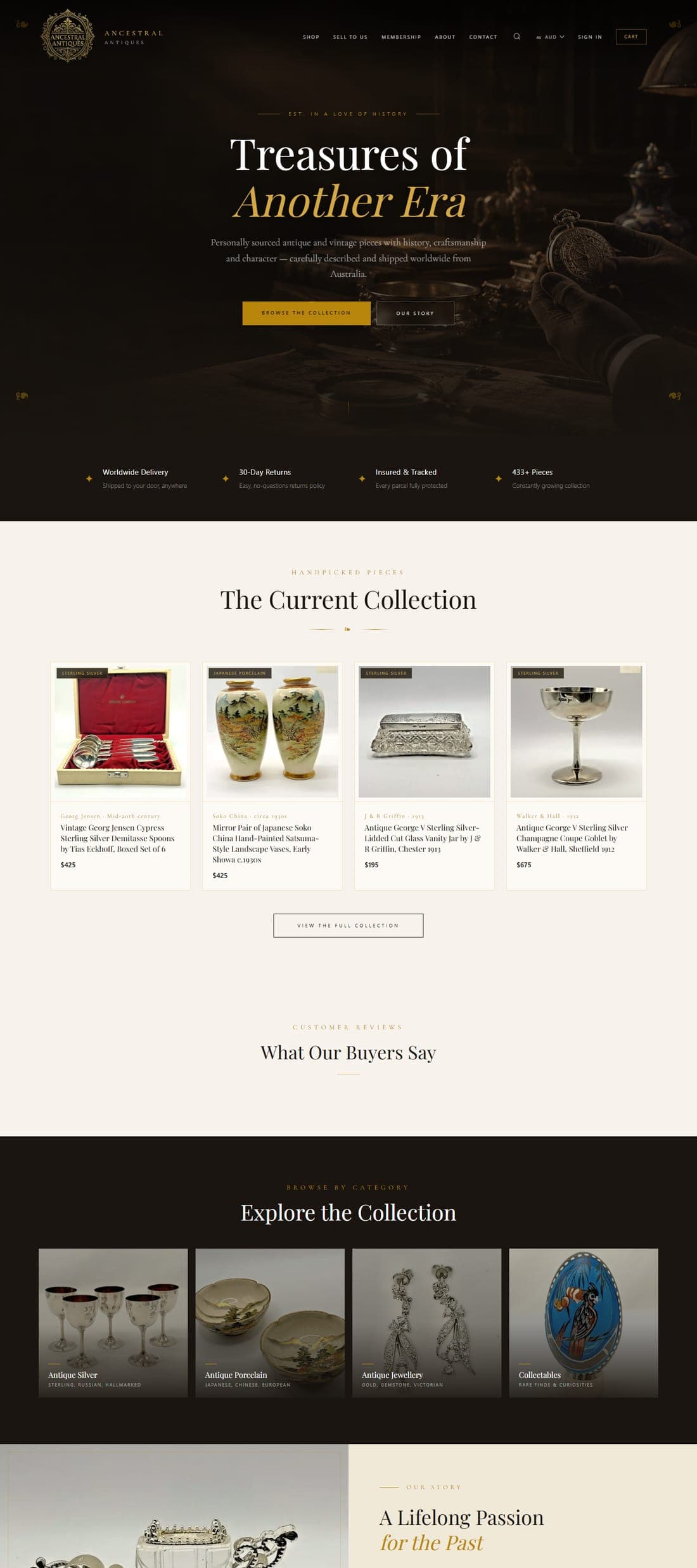
The store has a home page, four category pages, a page for every piece, a cart and checkout, customer accounts, a membership page and a page where people can offer their own antiques for sale.
- Four categories: silver, porcelain, jewellery and collectables
- A product page for each piece, with a photo gallery you can enlarge
- Maker and date shown beside every price
- Cart, checkout and customer accounts
- A currency selector for overseas buyers
- A "Sell to us" form with photo uploads
Product pages that answer the questions
Each piece has its own page with a full gallery, the maker, the date and a written description of the form, the hallmarks and the condition. A silver champagne coupe, for example, is listed with its maker and the year and city of its hallmark, so a collector can check it against their own references.
The trust details sit on the home page before anyone reaches a product: worldwide delivery, 30-day returns, and insured, tracked parcels. On a store where every sale is a leap of faith, those answers need to come first.
Built to be found
Collectors search for very specific things, such as a maker's name, a pattern or a hallmark year. So every product page has its own title and description written from the item's details, and carries product information in a format Google can read, including the price.
Category pages group the pieces the way people browse, and each one links through to its items so search engines can reach the whole collection. Our ecommerce websites page explains how we approach stores like this.
More than a shop
Two parts of the site go beyond selling. The membership page lets collectors create a free account to save pieces, with paid levels described on the page for people who want more. The "Sell to us" page lets someone with an inherited or unwanted piece send photos and details for review.
Both give the business a reason to hear from people who aren't ready to buy today, which matters when stock is one of a kind.
Results
The store is live with several hundred pieces listed, and you can visit it here. We haven't published sales or traffic numbers because we only share figures the business has confirmed. When there are numbers we can stand behind, they'll go on this page.
Ready for a website that works?

Book a free 15-minute call. We'll talk through what your business needs and give you an honest, fixed-price quote. No obligation, no sales pitch.